Showing posts with label Chicago. Show all posts

Sunday, October 10, 2021

The Great Chicago Fire Day Three, 150 Years -- October 10, 2021

Rock Island Argus, 11-October-1871

150 years ago today, on 09-October-1871, the Great Chicago Fire continued to rage for a third day. The fire burned for three days and killed at least 300 people. (Spoiler Alert) Mrs O'Leary's cow did not start it. 

VERY LATEST
BY TELEGRAPH.

4 O'Clock P. M.

THE CHICAGO DISASTER!
England Sympathizes and
Assists !
UNEXAMPLED DONATIONS
EVERYWHERE
St. Louis will give Half
a Million!
PROCLAMATIONS Of THE
GOVERNORS!
The Insurance Companies all
Right!
CHEERING MANIFESTATIONS
EXTRAORDINARY LIBERALITY !
HARROWING DETAILS !
Five Hundred Soldiers on
Duty !
LOSS $300,000,000 ! LOSS OF LIFE

[Reported Expressly for the Argus.]

Leavenworth, Oct. 10. -- The printers give $100 for Chicago. A train load of provisions on the way.

Kansas City, Oct. 10. -- Liberal subscriptions for Chicago.

New York, Oct. 10. -- The Governor has issued a proclamation urging instant relief for Chicago. All the cities are rapidly acting. Brooklyn has sent $100,000. Buffalo gives $107,000.

Boston Oct. 10. -- Boston gives $100,000 to Chicago.

London, England, Oct. 10. -- Intense excitement about Chicago. Large subscriptions being raised. Morgan and Co., bankers, give $5,000.

New York, Oct. 10. -- At a meeting of the Germania, Hanover, Niagara and Republic insurance companies, composing the Underwriters' agency of New York, today, preparations were made to pay immediately upon adjustment, all losses incurred in Chicago, after doing which the capital of all the companies will remain unimpaired. Special meeting of the Chamber of Commerce, called to act in reference to the Chicago sufferers, was largely attended. Immediately upon calling the meeting to order by Mr. Opdyke, Fiske and Hatch handed the chairman a check for $l0,000. The following firms gave $10,000 each: Henry Slews and Co., Jay Cook and Co., Illinois Railroad Company. One hundred persons were appointed to collect subscriptions.

The gold room gives $5,000. Certain merchants give $l3,000. Everybody is giving freely, -- Masonic lodges, mechanic associations -- everybody.

St. Louis, Oct 10. -- St. Louis has given $70,000, and intends to give half a million dollars to Chicago.

Des Moines, Oct 10. -- The governor of Iowa appeals to all the people of the state to contribute money for Chicago.

Chicago, Oct 10. -- Midnight. -- The arrival of firemen and engines from Milwaukee, St. Louis and other cities has apparently restored confidence. The Cincinnati men arrived this morning with four engines, three from that city and one from Dayton. There was inexpressible pleasure in seeing these experienced men go right to work in a business way, where work was most needed. They are playing on coal piles to save whatever of fuel is possible and prevent a further spread of the flames. The vast plain is covered with people wandering about and seeing the evidence of a wealth that has completely vanished in flames and smoke. Few business men with some nerve are starting houses for business on the West side. Rooms that rented last week for fifty dollars now readily command five thousand. There are not many of these but enough to afford a nucleus for business. The newspapers will be started again in a few days or a week. Hon. Joseph Medill, of the Tribune, who is one of the heaviest sufferers succeeded yesterday in leasing a building on Washington street, at the tunnel. He also purchased two single cylinder presses used in a job office on the West side and has telegraphed east for paper and type, there being nothing left here. Mr. Storey of the Times, will erect a rough one story building and begin to issue his paper as soon as material can be procured. The Journal is provided for the west side. The Post, Republican and Staat Zeitung will also arrange for business as soon as practicable, but everything must come from elsewhere as there is nothing left from the business.

Throughout the day yesterday a renewal of the fire on the West side was looked for and change of five degrees in the direction of the wind at any time would have told that the result there would literally have been no refuge for any one. Every one had their clothing packed ready to start for the prairie at any moment. At sundown the wind lulled and at three o'clock this morning the rain so fervently prayed for came. It did not fall long, but the roofs of the houses and the ground have been wet so that now it is possible to have fire to cook food for the masses.

A meeting of citizens was held in the First Congregational Church, on West Washington street, which was continued through the night. Measures were concerted to protect what property was left and also to provide for the homeless. Richard and Charles Craine, of the Northwestern Manufacturing company contrived a plan, which is being put into execution, for providing water in case of the fire breaking out again. The machinery of their works is being used for pumping water from the river. Fifteen hundred citizens were sworn in last night as extra policemen, and the Secretary of War has authorized Gen. Sheridan to employ all available troops to guard, and issue a hundred thousand rations.

Five hundred soldiers are on duty. This precaution is necessary, for as remarkable as it may seem, there were fiends who still sought to extend the disaster. Two men who were caught in the act of firing houses on the West Side were seized and immediately hung to lamp posts. One was caught on Twelfth street near the river, and the other three miles out on Clayborne avenue.

Chicago, Oct 11, 2:30 a. m. -- A careful survey Of insurances to-day shows that there were policies on the property destroyed to the amount of over two hundred million dollars. Add another hundred million to this sum and a fair estimate can be reached of the loss. All the leading merchants who have been seen express their determination to resume business at once. This includes the heavy houses of John V. Farwell, Field, Leiter and Co., Sprague, Warner and Co., and others.

In the City there it no water except what is gotten from the lake. Very grave fears of outrages by thieves on the West Side are felt. General Sheridan, who has been a hard worker all through the fire, is still asking for troops from different points, to keep order. All business and work is suspended and every one it intent on securing, first something to eat, next shelter.

The suffering on the North Side is heart-rending. Men, women and children -- fifty thousand of them -- huddled together like so many wild animals ; and, in another place, seventeen thousand Germans and Irish praying for relief ; helpless children asking for bread ; heart-broken parents, who know not which way to turn or what to say, nothing to do but to await the distribution of supplies which at best must be a slow proceeding, as there are parts of the burnt districts over which it is almost impossible to travel. Women in the pains of child-birth, and patients who have been aroused from beds of sickness to save lives that at best were nearly spent -- all exposed to the rain of last night and the cold, raw winds of today. Several deaths have occurred in Lincoln Park, and three women have brought children into the world only to die. There are people who, in the bitterness of their souls, ascribe the calamity to God's judgment. A German said to me: "This is a second Sodom and Gomorrah, and the curse is on it." Another night must be spent in Lincoln Park and the brick fields of Division street, and yet another and another. Each train and extra are loaded to their fullest capacity, taking people away who, in many instances, have no place to go to, yet can't stay here ; and every train is obliged to leave five times as many as it takes.

Saturday, October 9, 2021

The Great Chicago Fire Day Two, 150 Years -- October 9, 2021

Rock Island Argus, 09-October-1871

150 years ago today, on 09-October-1871, the Great Chicago Fire continued to rage for a second day. It burned for three days and killed at least 300 people. (Spoiler Alert) Mrs O'Leary's cow did not start it. 

VERY LATEST

BY TELEGRAPH.

4 O'Clock P. M.

THE CHICAGO DISASTER!
HUNDREDS OF MILLIONS LOST!
Tens of Thousands
Homeless!
GENERAL DESTITUTION.
SOME FURTHER
DETAILS!
LOSS OF LIFE
GENERAL SUMMARY!
Market Reports.

(Reported Expressly for the ARGUS.)
The following comes by way of St. Louis :
CHICAGO, Oct. 9, MONDAY Noon. -- The work of construction goes on with relentless fury. From Harrison street south to Division north, and from River, four miles long by one wide, the flames have swept everything before them. It is estimated at least 100,000 people are homeless and in a destitute condition. The streets are lined with such household goods as have been saved from destruction. Most generous offers of assistance in food are received from every city and town possible by telegraph. The Mayor has responded to several offers asking that cooked food be sent as soon as possible. Firemen are on their way here from Cincinnati, St. Louis and other cities. The water works are completely destroyed. They are blowing up buildings in the line of the fire, attempting to arrest its progress.

LATER. -- It is now believed that the spread of the fire southward has been stayed at Harrison street, but on the North Side there is no diminution. The entire division is evidently doomed to utter destruction. There are grave fears that the flames may spread to the west of the north branch of the river, and the inhabitants on the streets nearest the river are already moving to places of supposed safety.

The Western Union Telegraph Co. have now six wires working east and south, and running into a temporary office corner of State and Sixteenth streets.

The Northwestern Railroad is running trains on both its branches, which are crowded with fleeing citizens. It is now positively asserted by some that the water works are still intact, but the water has been shut off from the south and west on account of the quantity being used on the North Side.

CHICAGO, via CLINTON, Oct. 9, 8 p. m. -- The fire is reported extending south of Harrison street.

This looks as if the splendid residences on the Avenues may share the fate of the business houses of the money kings.

CHICAGO, Oct. 9, 9;30 p. m. -- The fire is still raging up as far as Lincoln Park, and reported still farther than that. The only building that could be seen between the river and lake from Harrison street on the south was the post office -- all others for six miles north have fallen to the ground. All the hotels, the Great Central Depot, and all the elevators, and the water works on the North Side, are destroyed. All the prisoners in the Court House jail were burned.

9 p. m. -- It is reported that they have about subdued the flames near Lincoln Park.

9:35 p. m. -- About two-thirds of the city is burned. Not a hotel or depot left. Everything is burned to the ground that was in the way of the fire. All the daily papers are burned out. The south and west part of the city is standing, but it is impossible to say how long it will stand. The north part of the city burnt to the ground. If the wind changes it will clean the rest, The water is played out, and the engines gone home. There is not a business house standing down town. It has burned down to the lake for four miles,, All is standing south of Twelfth street. The rest is gone.

Chicago, Midnight.

The simple facts that the great city of Chicago is destroyed, that hundreds of millions of active capital have been ruined, and that nearly one third of the inhabitants are homeless, are enough. Any attempt to embellish would be but mockery, as this awful day closes. Thousands of anxious eyes watch the dense clouds of smoke which roll over the burnt districts with such evident force that a sudden change of wind may fan the flames. There is, however, little cause for apprehension, and reinforcements of firemen from other cities are constantly arriving.

Col. J. S. Wilson, Telegraph Superintendent, is in receipt of dispatches from the leading cities, announcing that aid is being forwarded for the sufferers. The mayor of St. Louis telegraphs that $70,000 have been subscribed by the merchants there. Cincinnati promises $100,000, and Cleveland is proportionately generous. All this and a great deal more will be needed to relieve the immediate pressing wants.

About three-fourths of the United States mails were saved, and taken possession of by Col. Wood, of the post-office service.

STOCK YARDS DEPOT, Oct. 10 2 a. m. -- The fire it still burning on the North side.

Robbers, pick pockets, and villains of all descriptions are flocking to the city from all parts of the United States, and are plundering and pillaging the unfortunate citizens without mercy.

Friday, October 8, 2021

The Great Chicago Fire Day One, 150 Years -- October 8, 2021

Rock Island Argus, 08-October-1871

150 years ago today, on 08-October-1871, a fire broke out in Chicago. It burned for three days and killed at least 300 people. (spoiler alert) Mrs O'Leary's cow did not start it. 

THE GREAT CHICAGO
FIRE.
SPECIAL DISPACHES TO THE
ARGUS.
500 Prisoners Perish !

Chicago Totally
destroyed.

Chicago, Monday Morning, 8 o'clock

The conflagration still rages with unabated violence. Our citizens begin to despair. The water in the plugs gave out last night, and we are now utterly helpless. A kind of whirlwind has been created by the flames, which carries masses of burning material high in the air, and scatter them broadcast over the city. A dense column of smoke rise to an immense height. The spectacle is one indeed terrible to contemplate.

The fire streamed across the river at daylight, and at this data has consumed all that part of the city contiguous to Van Buren street. The devastation is beyond calculation. A gale from the lake is still blowing, setting all human efforts at defiance. Four of the steamers have blown up, and only six are left. Assistance is expected from the fire department of Milwaukee and other points.

The best part of the city has been laid in ashes. The Sherman House, Briggs House Metropolitan Hotel, Wood's Museum, Tremont House, and Merchant's Insurance Company's Building, and other splendid structures are in ruins. It is reported that the office of the Times, Tribune, Post, and Republican are destroyed. This dispatch comes from the Union Stock Yards, and it is impossible to distinguish fact from rumour, but the probabilities are that all these offices are burned. The best of the city is irretrievably gone. All the splendid residences along Wabash and Michigan Avenues are in danger. A perfect panic prevails.

It is also reported from the city that the Brunswick Billiard Hall, Board of Trade Building, Bryan Hall, Stein's Bazaar, Bryant and Stratum's Business College, and all contiguous establishments are gone. From the location of the fire this is doubtless true.

Monday Morning, 9:30 o'clock. -- It is rumored that everything has been swept clean from Polk street north to Lincoln Park. The beautiful stone depot building of the Chicago, Rock Island & Pacific and the Michigan Southern roads, is gone, as well as all the property adjacent. The city telegraph office is burned, and all communication cut off with St. Louis and eastern points. In fact, Rock Island is about the only point to the westward which can be reached, and that only by way of the Union Stock yards, several miles from the scene.

LaSalle street is strewn in ashes. The finest insurance buildings in the city are destroyed. Coal yards and elevators are destroyed by the score. The fire still rages. A thousand alarming rumors prevail. The post office is gone.

The distance from Polk street to Lincoln Park is about six miles reported destroyed. May be an exaggeration.

Chicago, Monday, 10 a. m. -- All Chicago is on fire. The Western Union, Great Western, Atlantic and Pacific, and Pacific and Atlantic telegraph offices were totally destroyed. The Court House, Shermam Briggs, and Tremont House, Post Office Board of Trade Office, C, R. I. and P. Railroad Depot, Pacific Hotel. Field, Leiter and Co., J. V. Farwell, and in fact everybody is burnt out. All the city banks are burned, and in fact all the business part of the city and the fire is still raging. The burnt district reaches from about 12th street north, and from Canal street, on the west side, to the lake. The business part of the city is entirely gone, and the fire is still raging. The firemen are exhausted; water has given out; business entirely suspended.

Union Stock Yards, 11 a. m. -- When the steamer "Long John" blew up, twelve persons are said to have been killed. The "Fire Queen" was also blown up. The engine on the water works broke down, thus cutting off the supply. The origin of this vast conflagration is presumed to have been accidental.

VERY LATEST.

Union Stock Yard Monday, 1,15 P. M. -- Chicago is wiped out of existence. The whole city is in ashes. Every particle of the city proper is gone. All of the west side is burnt except the suburbs. All of the south side is destroyed except below Fourteenth street. All of the north side is gone. The scene beggars description. Many persons must have been killed by falling buildings and many have no doubt perished in the flames. What our great population will do, thus rendered homeless, is a question.

Union Stock Yards, 2 30 p. m. -- The burnt district extends from Halstead Street on the south, and straight north to Lincoln Park, leaving but a narrow strip unburnt around the Great Central depot at the foot of Lake street.

Union Stock Yards, 4 p. m. -- The Post Office building is the only one left standing on the south side between Harrison street and Lincoln Park, a distance of six or seven miles. At three, o'clock the sea of fire passed entirely through the Park, and swept into the woods beyond. A low rolling wooded country stretches on from there to British America for a distance of fifteen hundred miles. The fire is still raging along Harrison street. The wind is from the south-east. Should it change to the North or north-east, what little is left of the city would soon go.

The most horrible fact connected with the catastrophe, is that of the burning to death of from three hundred and fifty to five hundred prisoners in the Bridewell Prison last night. It was found impossible to rescue them.

Mr. Guild, of Rock Island, keeping the La Clede House, was burnt out. Crosby's Opera House, the Adam House, the Illinois Central Depot and elevator, the C., B. and Q. general office, and the Union depot at the foot of Clark street, are all in ashes.

Friday, January 1, 2021

January, 2021 Version of the Cable Car Home Page -- January 1, 2021

The Cable Car Home Page will be 25 years old in November.

I just put the January, 2021 version of my Cable Car Home Page on the server:
http://www.cable-car-guy.com/

It includes some new items:
1. Picture of the Month: The main power station of the Chicago City Railway (source: The Street Railway Journal, August, 1889). 

2. On the Chicago page: Read about the Main Power Station of the Chicago City Railway. (source: The Street Railway Journal, August, 1889). 

3. On the Cable Car Lines in Ohio page: A ten year update about the Cleveland City Cable Railway, including a new ad for bonds. 

4. Added News items about the effects of the COVID-19 pandemic and a proposal to remodel the outer terminal of the Cal Cable line

Ten years ago this month (January, 2011):
1. The picture of the month: A Lefton model of a Cleveland City Cable Railway Payne Avenue grip car.

2. On the new Cable Car Lines in Ohio page: A new article about the Cleveland City Cable Railway

3. On the Who page: A new article about Colonel William H Paine, engineer on the Cleveland City Cable Railway and many other cable traction lines

4. On the Decorated Cable Cars page: More images of car 60 decorated for Christmas 2010, along with photos of other decorated cars including 9, 13, 14, and 25, mostly taken on a day of playing tourist.

5. Added News and Bibliography items about the early shutdown of the California Street line

6. Added News items about plans to make Powell into a pedestrian mall all the way to Geary Street and about the Angels Flight 109th birthday celebration

7. Add links to new site for Peter Ehrlich's photography business and the San Francisco Trains site

Twenty years ago this month (Winter, 2001):
1. Picture of the Quarter: Market/Hayes cable car by IW Taber

2. Roll out More Market Street Pictures page.

3. Add "The Los Angeles Cable Railway" article from Scientific American, courtesy of Tom Ehrenreich.

4. Ray Long provided two photographs of the Industry Hills Incline, one of Sacramento/Clay car 16 on the Emporium roof and one of Cal Cable 56 at Washington/Mason.

5. Add section on The Electrical System to How Page.

6. Add Beebe book and article about ergonomic adjustments to turntable to Bibliography.

Coming in February, 2021: On the Cable Car Lines in Ohio page: 

A ten year update about Cleveland's Brooklyn Street Railroad/South Side Railway, both owned by Tom L Johnson, one of which had an experimental cable installation using the Johnson Ladder Cable System

The Cable Car Home Page now has a Facebook page:
https://www.facebook.com/CableCarHomePage/


Joe Thompson
The Cable Car Home Page (updated 01-January-2021)
http://www.cable-car-guy.com/
San Francisco Bay Ferryboats (updated 31-January-2020)
http://www.cable-car-guy.com/ferry/
Park Trains and Tourist Trains (updated 31-July-2019)
http://www.cable-car-guy.com/ptrain/
The Pneumatic Rolling-Sphere Carrier Delusion (updated spasmodically)
http://cablecarguy.blogspot.com
The Big V Riot Squad (new blog)
http://bigvriotsquad.blogspot.com/

Thursday, October 22, 2020

Chicago Ball Players Accused of Conspiracy -- October 22, 2020


Morgan County, Tennessee Press, 22-October-1920

100 years ago today, on 22-October-1920, a grand jury indicted eight members of the Chicago White Sox and five gamblers for fixing the 1919 World Series. 

Thirteen Are
Indicted for
Ball "Fixing"

Seven Members of White Sox,
Three Former Players, Boxer
And Two Gamblers Are
Named by Grand Jury.

Chicago, Oct. 29. -- Two indictments charging 13 persons with operating a confidence game and conspiracy were returned in court today by the grand jury investigating the base ball scandal.

Seven members of the Chicago White Sox, three former base ball players, a boxer and two gamblers were named in the true bills voted recently,

The charges grew out of the alleged "fixing" of last year's world's series between the White Sox and Cincinnati.

Those indicted are:
Eddie Cicotte, Joe Jackson, Claude Williams, Fred McMullin, George Weaver, William Burns, Oscar Felsch and Charles Risberg, White Sox players: Arnold "Chick" Gandil. former White Sox player; Hal Chase, former New York Giants; Abe Attell, former boxer; Joseph "Sport" Sullivan of Boston; and Rachael Brown of New York.

The conspiracy indictment contains five counts, including charges of conspiracy to obtain money under false pretenses and to injure the business of the Chicago American league base ball club.

Three Confess.

Cicotte, Jackson and Williams Confessed to the grand jury they had accepted bribes to lose the series last year, and named the others as parties to the plot.

Extradition papers have been prepared by the state's attorney for the 13 and efforts will be made immediately, it was announced, to obtain their return to Chicago. Attell is reported to be in Canada; Cicotte in Detroit, Gandil in Texas, Jackson and Weaver in North Carolina.

True bills against three owners of base ball pools were voted today by the special Grand Jury Investigating base bell.

Owners of the Great Western, Universal and American-National pools are named In the bills. All are Chicago men.

Chief Justice McDonald announced that he would fix bail at $5,000 on each Indictment or 10,000 for each of those named.


To Meet Again Nov. 6.

Investigation of the pools resulted from numerous complaints received by the Grand jury from men holding winnings, who were unable to collect on their slips.

The special grand jury adjourned late today until November 6, when it will be dissolved unless further evidence Is brought up for consideration.

Those against whom true bills were voted today are:
William Chellue, Martin Carlin and F. C. Walters, all of Chicago,

While the grand jurors were returning the indictment before Chief Justice Charles A. McDonald. Ban Johnson, president of the American league, turned over to Assistant State's Attorney Hartley Replogle a letter from a Kansas City sporting editor alleging that "Frog" Thompson, Kansas City gambler received a telegram, from Claud Hendrix, Chicago Cub player advising, him to "bet $5,000 on the opposition" in the game between Philadelphia and Chicago here August 29. It was the circumstance surrounding the Cubs defeat on that data that started the base ball gambling investigation. The Kansas City letter also alleges that Thompson received a telegram from Hal Chase, who was then In California, confirming the Hendrix message.


Wednesday, April 29, 2020

Chicago Cubs 150 Years -- April 29, 2020

Chicago Tribune, 30-April-1870

150 Years ago today, on 29-April-1870, the Chicago Cubs, then called the White Stockings, played their first game.  Later in the same season, the White Stockings joined the National Association of Base Ball Players. In 1876, the Cubs joined the new National League. The St. Louis Unions were not the ancestors of the Cardinals.

SPORTING MATTERS.
Opening of the Base Ball Campaign at St. Louis.
The Chicago Nine versus the Unions.
The "White Stockings" Victorious -- Score, 47 to 1.

Special Despatch to The Chicago Tribune.


BASE BALL.
THE CHICAGO NINE VS. THE UNIONS, OF ST. LOUIS.

St. Louis, April 29. -- The Chicago Base Ball Club inaugurated the match game season of 1870, to-day, by a contest with the Unions, of St. Louis, and achieved one of the greatest victories on record.

ARRIVAL AT ST. LOUIS.

The Chicago nine reached this city at 11 o’clock this forenoon, after a safe and comfortable journey over the Illinois Central, being supplied with quarters in the sleeping car, and proceeded to the Laclede Hotel, where they were allotted spacious and nicely furnished rooms, the same suite as that occupied by the Red Stockings on the occasion of their visit here last season.

TO THE FIELD.

Dinner over, the club entered carriages supplied by the Unions, and were driven to the base ball park, about four miles northwest of the city, where both clubs were soon on hand in readiness for work.

UNIFORM OF THE CHICAGO NINE.

The Chicago nine were clad in their new uniform, which they had donned for the first time, and an elegant one it is. It consists of a blue cap adorned with a white star In the centre, white flannel shirt, trimmed with blue and bearing the letter C upon the breast worked in blue. Pants of bright blue flannel with white cord, and supported by a belt of blue and white stockings of pure white British thread, shoes of white goatskin, with the customary spikes, the ensemble constituting by far the showiest and handsomest uniform ever started by a base ball club. Already the snowy purity of the hose has suggested the name of "White stockings" for the nine, and it is likely to become as generally accepted, not to say as famous, as that of the sanguinary extremities.

THE ST. LOUIS CLUB.

The Union Club, which is composed entirely of the best class of St. Louis young men, also sported their new outfit for the first time, the same being made up of white cap, shirt, and pants, and bine stockings.

THE ATTENDANCE.

About 600 hundred people were present, and the day was as bright and warm and beautiful as could have been prayed for.

THE GROUNDS

were not in the best of condition, owing to the extreme length of the grass, which materially altered the calculations of the Chicago players in stopping ground balls. A vast deal of interest was taken in the game by the St. Louis people, who were curious to see whether the Chicago Club would administer as severe a beating to the Unions as did the Red Stockings, in 1869, when the score stood 70 to 9 -- the prevailing opinion being that it would not be done.

COMPOSITION OF THE ST. LOUIS NINE.

The Union nine is considered materially stronger than that of last year, being now constituted as follows: Turner, second base; German, short stop; Easton, first base; Mellier, left field; Lucas, pitcher; Greenleaf, right field: Duncan, third base; Wolff, centre field; and O’Brien, catcher. They certainly proved themselves a strong nine in the field and on the bases -- stronger than any of the amateur organizations -- but did not develop a corresponding shill at the bat.

The Chicago Club was positioned in the regular way, McAtee playing at first, although yet troubled by his leg; and Flynn served as a substitute, the first game, by the way, which be ever witnessed as a spectator, played by a club with which he was connected.

THE GAME.

The game was called at 3 1/2 o’clock, B. J. Shafer, of the Actives, of New York, being selected as umpire, and proving most efficient, watchful, fair, and prompt in that position.

First Innings -- The Chicago Club won the toss and sent the Unions to the bat. Myerle pitched and Craver caught. Tomer and German struck out, and Easton struck short to Easton, who picked it up, sent it to McAtee, and the side was out with a whitewash.

Chicago in turn found sharp work among the fielders. Hodes being caught out on a fly by Easton Wood fouling out on a pretty catch by O’Brien, while Craver hit low to second, where Turner stopped it nicely and sent it to Easton, and the side was out with but two runs scored, -- these by King and Cuthbert.

Second Innings -- This time the Unions had better luck. A short fly by Mellier was taken by McAtee. Lucas got to third on a wild throw by Meyerle to McAtee. Greenleaf got his first, and then came home on a high fly by Duncan to right field, where Cuthbert failed to secure it, scoring the first run for the Unions. Amid loud cheering, Wolff struck out, leaving Duncan on third. Myerle got his second on a fine hit to centre field. Pinkham hit short to Turner, who fielded to Easton, and the man was nipped; Hyerle stealing to third, and coming in on the hit. McAtee gave an easy fly to Turner, which he took. King sent a "sky scraper" to centre field, which Wolff took splendidly, and the side was out, with one run scored.

Third Inning -- O’Brien’s high fly was captured by Hodes. Turner got his first on a had hit out of Hodes' reach. German hit low to second, which Wood stopped splendidly, touching out Turner, who been forced, and then sending to McAtee and taking care of German. Side out -- no runs. Chicago made eight runs In this inning -- Hodes. Wood, Treacy, Craver, Myerle, Pinkham, McAtee and King each getting one. Cuthbert’s strong hit to right field was taken by Greenleaf. Hodes met a similar fate at the hands of Mellier, and Cuthbert again came to grief by a low hit which German stopped and sent to Easton.

Then remainder of the game hardly calls for a detailed description, the Unions suffering a whitewash in each of the subsequent innings, and scoring but 1 run in the game, while Chicago secured 47.

REMARKS.

In the fifth innings Pinkham, who had played at third, took Myerle's place, the latter having been far more effective and regular than usual. Of course, Pinkham sent them in hot, and hard to hit, the Unions being unable to bat more than high flies during the game. Their fielding, however, was splendid, there being very few muffs in that line, while the bases were most efficiently played. Lucas is a swift, though rather irregular pitcher, and O'Brien an excellent catcher. In the seventh inning the latter was severely hurt by a ball, and was obliged to retire for a time, Turner taking his place, Wolff coming to second, and Asa Smith going to centre field. The result was a few more passed balls, which made no especial difference in the score.

THE PLAY OF THE WHITE STOCKINGS.

On the part of the Chicago nine it would be difficult to discriminate where all did so well, the very few errors which were made being mainly attributable to the long grass. The batting was terrific, long and safe. Craver distinguished himself by several magnificent foul flies; Treacy by a fine running fly catch, and Myerle one of the same sort. That the others did not come in for a share of the honors was due to the inferior batting of the Unions. Treacy led the batting score, made seven first base hits, and nine total bases on hits.

Appended is the score:


COURTESIES.

This evening the Chicago nine accepted the invitation of the Unions, and visited the Varieties, where two private boxes were placed at their disposal. The club has been handsomely received and treated by the Unions, and the St. Louis people in general.

TO-MORROW'S GAME.

To-morrow the club plays a match game with the Empires, of this city, a nine about the same strength as the Unions.

Sunday, March 1, 2020

March, 2020 Version of the Cable Car Home Page -- March 1, 2020


I just put the March, 2020 version of my Cable Car Home Page on the server:
http://www.cable-car-guy.com/


It includes some new items:
1. Picture of the Month: This West Chicago Street Railroad powerhouse at Washington and Jefferson Streets still stands in altered condition. I don't know why that big blank wall is there in front. Google Maps Streetview Image updated August 2019. Copyright 2020 Google.
2. On the Chicago page, A ten and twenty year update about the the West Chicago Street Railroad
3. Added News item about how production of a movie caused bus substitution on the Cal Cable line.


Ten years ago this month (March, 2010):
1. Picture of the Month: West Chicago Street Railroad trains on Randolph Street
2. On the Chicago page, more about the West Chicago Street Railroad, including a selection from the 1898 Report of Special Committee of the City Council of Chicago on the Street Railway Franchises & Operations, an ad for a default settlement, and a contemporary newspaper article:
Chicago -- Halsted Street Runaway (Saint Paul Daily Globe, Monday, February 25, 1895) Also on the Chicago page, two magazine articles about the Chicago Tunnel Railway
3. Also on the Chicago page, two magazine articles about the Chicago Tunnel Railway
4. On the San Francisco page: A link to a blog about Cubbie the Cable Car
5. On the Cable Car Video page:
-- Two F Line views of Muni 162 this year.
6. Thanks to Ric Francis, added News and Bibliography items about the shutdown of the Penang Hills Railway, a funicular
7. Added News and Bibliography items about Eric Neubauer's book about early Pullman car production
8. Add link to the website of an Italian colonel who commands a military railroad engineering unit


Twenty years ago this month (March, 2000):
1. Picture of the Month: West Chicago cable train on Madison Street
2. Add West Chicago Street Railway to Chicago page.
3. Add article about the Chicago Tunnel Railway to the Chicago Miscellany page
4. Add more detail to Seattle page. Add Yesler/2nd & Iron Pergola pictures.
5. Add J M Thompson (no relation) to the Who page
6. Add links to Steve Annells' The Bus Station, Jacek Wesolowski's Urban Mountain Railways and People Movers site, and Joel GAzis-SAx's An Almanac of California.

125 years ago, on 03-March-1895, the Gilmor Street line of the Baltimore Traction Company was converted to electric traction

Also 125 years ago, on 09-March-1895, Washington DC's Columbia Railway opened its main line

Also 125 years ago, on 19-March-1895, Oakland's Consolidated Piedmont Cable Company sold at auction

Coming in April, 2020: On the Cable Car Lines in Chicago page: On the Cable Car Kitsch page: Twenty years of Kitsch. New items include another TWA poster.

The Cable Car Home Page now has a Facebook page:
https://www.facebook.com/CableCarHomePage/

Joe Thompson
The Cable Car Home Page (updated 01-March-2020)
http://www.cable-car-guy.com/
San Francisco Bay Ferryboats (updated 31-January-2019)
http://www.cable-car-guy.com/ferry/
Park Trains and Tourist Trains (updated 31-July-2019)
http://www.cable-car-guy.com/ptrain/
The Pneumatic Rolling-Sphere Carrier Delusion (updated spasmodically)
http://cablecarguy.blogspot.com
The Big V Riot Squad (new blog)
http://bigvriotsquad.blogspot.com/


Saturday, February 1, 2020

February, 2020 Version of the Cable Car Home Page -- February 1, 2020


I just put the February, 2020 version of my Cable Car Home Page on the server:
http://www.cable-car-guy.com/

It includes some new items:
1. Picture of the Month: A North Chicago Street Railroad train at Clark Street and North Avenue. Note the two trailers. (Source: Chicago Public Library Digital Collection, Repository number RLVCC 1.1056. All rights reserved).
2. On the Chicago page, A ten and twenty year update about the the widely hated North Chicago Street Railroad
3. Added News items about the cable cars decorated to honor the 49ers visit to the Super Bowl and the retirement of Sir Francis Drake Hotel Tom Sweeney.

Ten years ago this month (February, 2010):
1. Picture of the Month: The LaSalle Street powerhouse was "Michael Jordan's The Restaurant(tm)" for many years.
2. On the Chicago page, more about the widely hated North Chicago Street Railroad, including a selection from the 1898 Report of Special Committee of the City Council of Chicago on the Street Railway Franchises & Operations, an advertisement for investors, a cartoon and some contemporary newspaper articles:
-- Chicago -- Patent Lawsuit (Sacramento Daily Record-Union, Wednesday, December 21, 1887)
-- Chicago -- Runaway Horse Car (San Francisco Morning Call, Sunday, October 03, 1890)
-- Chicago -- Cable Cars to Carry Bicycles (Saint Paul Daily Globe, Sunday, May 30, 1897)
-- Chicago -- Making Money From Cable Cars (Omaha Daily Bee, Saturday, July 1, 1899)
3. On the Cable Car Models page, photos and a video of Garden Scale Cable Cars
4. On the Horse Car Home Page, a John Stephenson ad and a Chicago newspaper article

Twenty years ago this month (February, 2000):
1. Picture of the Month: North Chicago cable trains at the La Salle Street tunnel, Chicago
2. Add North Chicago Street Railway to Chicago page.
3. Add article about the Patent Trust to the Miscellany page
4. Add C T Yerkes to the Who page
5. Move Thanks/Links to a separate page
6. Add postcard of former cable car used on Mount Tamalpais railroad to San Francisco/Omnibus page
7. Add information about iron pergola in Seattle
8. Add information about modern Portland, Victoria tourist cable tram project to the Melbourne page

150 years ago, on 26-February-1870, the Beach Pneumatic Subway started operating.

125 years ago, on 25-February-1895, a cable train of the West Chicago Street Railroad collided with a horse car.

Coming in March, 2020: On the Cable Car Lines in Chicago page: A ten and twenty year update about the West Chicago Street Railroad

The Cable Car Home Page now has a Facebook page:
https://www.facebook.com/CableCarHomePage/

Joe Thompson
The Cable Car Home Page (updated 01-February-2020)
http://www.cable-car-guy.com/
San Francisco Bay Ferryboats (updated 31-January-2019)
http://www.cable-car-guy.com/ferry/
Park Trains and Tourist Trains (updated 31-July-2019)
http://www.cable-car-guy.com/ptrain/
The Pneumatic Rolling-Sphere Carrier Delusion (updated spasmodically)
http://cablecarguy.blogspot.com
The Big V Riot Squad (new blog)
http://bigvriotsquad.blogspot.com/

Sunday, January 26, 2020

January, 2020 Version of the Cable Car Home Page -- January 26, 2020


Due to the medical issues of a family member, I am shamefully late in putting out my January updates.

I just put the January, 2020 version of my Cable Car Home Page on the server:
http://www.cable-car-guy.com/ 

It includes some new items:
1. Picture of the Month: A three car (grip car and two trailers) Chicago City Railway Wabash/Cottage Grove Avenue train terminates at Jackson Park. (source: Chicago Tribune Historical Photographs; CTA).
2. On the Chicago page, A ten and twenty year update about the Chicago City Railway, one of the most successful cable traction companies in the industry.

Ten years ago this month (January, 2010):
1. Picture of the Month: A stereo view of "State Street north from Madison" in Chicago
2. On the Chicago page, more about the Chicago City Railway, including a selection from the 1898 Report of Special Committee of the City Council of Chicago on the Street Railway Franchises & Operations and contemporary newspaper article:
-- Chicago -- Gripman Killed (Saint Paul Daily Globe, Friday, February 03, 1882)
-- THE CABLE-CAR LINE/Progress of the Work -- Eleven Trains and the Horse-Cars Still Running (Omaha Daily Bee, Wednesday, February 15, 1882)
-- Chicago -- Third Fatality (Sacramento Daily Record-Union, Saturday, March 25, 1882)
-- Chicago -- Fifteenth Victim (Saint Paul Daily Globe, Monday, September 04, 1882)
-- Killed by a Cable Car. (New-York Tribune, Wednesday, November 6, 1893)
-- STOPS CHICAGO CABLE LINES./The City Begins Active War on Street Car Company. (New-York Tribune, Thursday, January 18, 1906)
-- CABLES MAKE LAST RUN ON STREET IN CHICAGO (San Francisco Call, Sunday, July 23, 1906)
3. Added Bibliography item about Mayor Newsome's proposal to fill in part of Hallidie Plaza and install a reservoir or cistern below it
4. Added News and Bibliography items about the discovery of a relic of Saint Paul Minnesota's Selby Avenue cable car line

Twenty years ago this month (January, 2000):
1. Picture of the Month: State Street, Chicago
2. Roll out Chicago page with Chicago City Railway and excerpt from The Pit by Frank Norris.
3. Add Miscellany page
4. Add C B Holmes and Asa Hovey to the Who page
5. Add items about Muni's New Year's Eve plans to news and bibliography
6. Add links to Library of Congress page about cable cars and Don's Railspo

Coming in January, 2020: On the Cable Car Lines in Chicago page: A ten and twenty year update about the Chicago City Railway, one of the most successful companies in the industry

The Cable Car Home Page now has a Facebook page:
https://www.facebook.com/CableCarHomePage/

Joe Thompson
The Cable Car Home Page (updated 01-January-2020)
http://www.cable-car-guy.com/ 
San Francisco Bay Ferryboats (updated 31-January-2019)
http://www.cable-car-guy.com/ferry/
Park Trains and Tourist Trains (updated 31-July-2019)
http://www.cable-car-guy.com/ptrain/
The Pneumatic Rolling-Sphere Carrier Delusion (updated spasmodically)
http://cablecarguy.blogspot.com
The Big V Riot Squad (new blog)
http://bigvriotsquad.blogspot.com/


Tuesday, July 30, 2019

Streets Dotted With Killed and Injured as Race Rioting Renews -- July 30, 2019

Arizona Republican, 29-July-1919

The Chicago Race Riot of 1919 lasted from July 27 to August 3. Far too many people died.

STREETS DOTTED
WITH KILLED AND
INJURED AS RACE
RIOTING RENEWS

Seven Known Dead and
Scores Wounded, as the
Whites and Blacks Clash
-- Police Unable to. Quell
Outbreaks

[Republican A. P. Leased Wire]
CHICAGO, July 28 -- Seven persons were killed and more than two score wounded, many of them, seriously in a renewal of race riots in the Chicago "black belt" tonight.

For more than five hours the five-mile area on the South Side was a battle ground of scattered fights between whites and blacks and between policemen and negroes, who fired from housetops, from dark alleys and other points of vantage.

The call for troops to quell the outbreaks resulted in four regiments of national guardsmen being mobilized, but at a late hour tonight they had not been dispatched to the disturbed district and Chief of Police Garrity expressed the belief that the worst of the disorder had passed.

Five of Dead Are Negroes

Five of the dead are negroes and two are whites.

There was no concentrated battle by the blacks, the outbreaks dotting a large area.

Every police station on the South Side was flooded with reports of deaths and injuries.

Chief of Police Garrity at a late hour said that it was impossible to make an exact estimate of the casualties because of the contradictory reports.

The riots, which started yesterday on the South Side beaches, were renewed when negro laborers began leaving the big industrial plants and by dusk more than a score of separate outbreaks had occurred.

Whites began dragging negroes from street cars, the negroes retaliating with stones and knives. Street cars in the heart of the "black belt" were tied up and the windows smashed.

Blacks Form "Flying Squadron"

A flying squadron of blacks mounted a touring car and riding at full speed through the section known as "No Man's Land," sent a volley of shots at a group of whites. One white woman was injured, but not fatally. The negroes were overtaken after a long chase and placed under arrest.

Shortly afterward a mob of several hundred blacks formed at Thirty-fifth street and began stoning a policeman. In a twinkling gun fire was opened and four the negroes fell, all mortally wounded.

A white man In the same neighborhood was dragged from a truck and stabbed to death.

A negro chauffeur was killed by whites a few minutes later in the same block.

Scores of arrests were made, but where the rioters were found to to be unarmed they were released.

Negroes began looting stores of whites in one district shortly after the firing of revolvers by a squad of policemen in an effort to break up a fight over a small purchase of groceries. The police soon emptied their guns. The looting continued until a special squad of police armed with rifles arrived. They fired low, felling a dozen blacks.

Assaults White Woman

A white woman was pulled from a street car by a negro. He was soon lying unconscious against the curb. The angry whites had left him for dead.

Groups of blacks formed in football fashion and charged against whites with razors and clubs. On one corner the scene was like a minature battle ground.

Unconscious negroes and whites dotted the street. As they regained consciousness they were arrested or permitted to leave the neighborhood.

Women Fight With Brooms

While the main battles were in progres, women, blacks and whites, battled away in front yards with brooms and missiles. In one of these fights, a white woman was knocked unconscious and taken to a hospital.

In one battle on Thirty-Fourth street, negroes knocked two policemen unconscious and were drawing guns when a group of discharged negro soldiers came to the rescue of the whites.

In another battle soon after, three policemen were shot. One may die.

In an effort to prevent quick transportation of rifle-bearing policemen from one section to another. the negroes began cutting telephone and telegraph wires.

Attack Car Men

The blacks began firing on street car conductors and motormen when they refused to allow negro passengers to board their cars because of threats made by white passengers. One conductor was reported shot in the leg.

Ambulances and patrol wagons threaded their way through the black belt throughout the early hours of the night.

A number of wounded negroes crept into alleys and other dark places. When tbey were found they were hurried to the Provident hospital for colored, which for several hours, received a virtual procession of injured men and terror-stricken women.

The more seriously wounded negroes participated in a battle with whites near Thirty-fifth and State streets. Several thousand of the blacks congregated at this point within a period of 10 minutes. It was an orderly gathering for a time. Suddenly four maddened negroes raced up the street and surrounded the home of a white man. In a twinkling shots began to fly in all directions. More than a score of negroes fell. Some were carried off by companions.

Snipers Fire Indiscriminately

For more than two blocks along one street, negro snipers fired from house tops and windows. Not a single death, resulted from this method of warfare, however.

After threats had been made by whites to "clean up" the stock yards district, a small army of negroes formed ready to meet the challenge. An automobile of negroes started over the district to estimate the number of whites present. They were stoned. Then they drew revolvers and racing at top speed, fired at whites along the road. A white man was shot in the shoulder and a bullet grazed the head of a white woman.

Police Curb Outbreak

The negroes were overtaken and rescued from the mob by policemen. In the meantime squads of mounted police arrived in the district in anticipation of trouble, and what was expected to be the most serious outbreak of the night was curbed.

Police wires were busy all nipht with pleadings from frightened women for protection. Many of them feared to leave the scene of action and they were terrified by the dramatic battles and feared their homes would be wrecked before morning.

Street lights along some streets were smashed and the streets darkened. Then the bright flashes from pistols would signify a new atttack and in almost no time the immediate vicinity would be a surging mass of whites and blacks. When they came together in large crowds, fists, knives and clubs were used.

One of the morning newspapers will place the estimated dead at 14, nine whites and five blacks, and another will place the number of dead at 13, 11 blacks and two whites. The city news bureau places the dead at seven.

After a motorman had been dragged from his car and killed by a group of maddened blacks shortly before midnight and a dozen street cars wrecked, the street car company ordered that no more cars be taken into the troubled area. The elevated trains also quit running in dangerous territory.

Troops continued to move to a centralized point on the South Side throughout the night, but up to midnight they had not been ordered to begin patrolling the streets. This was explained by the statement that the outbreaks had slackened to such extent that the police could afford as much protection as the troops.

Hundreds of stenographers, clerks and loop employers who must pass through the black belt to reach their homes remained in the business district hotels and at North Side lodging places.

Poolrooms, moving picture houses and other gathering places in the black belt were ordered closed.

While the blacK belt was seething with strife, negro educators and churchmen sent out appeal after appeal that the negroes go to their homes and keep peace.

They charged that in most outbreaks, the negroes had been heckled by whites.

The disorders did not extend north to the business district, except for minor outbreaks.

Tuesday, May 1, 2018

The Fair Opened -- May 1, 2018

Roanoke Times, 02-May-1893
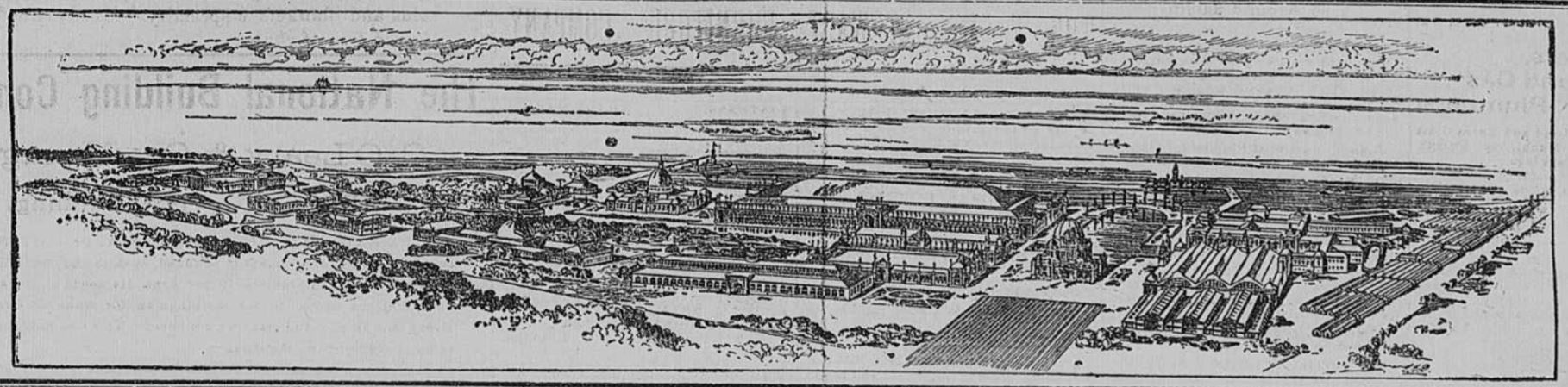
125 years ago today, on 01-May-1893, the World's Columbian Exposition opened in Chicago.  Even though it missed slightly, it was meant to celebrate the 400th anniversary of Christopher Columbus landing in the New World. This article is from the 02-May-1893 Roanoke Times. "Esquiman" means "Eskimo," which is a term not used nowadays.

THE FAIR OPENED
Previous Expositions Relegated to the Rear.
AMERICA LEADS ALLTHE WORLD
Cleveland Touched the Button the Machinery Did the Rest.
EUROPEANS AMAZED AT THE SIGHTS
Great Energy Displayed In Putting the Ground In Presentable Shape -- Tlie Inaugural Programme Carried Out -- Majestic and Harmonious Arrangement of the Entire Scene -- Two Years Ago a Marsh, Now the Scene of Bewildering Evidences of the Aesthetic Progress of the Nation -- Rivalry Between France and Germany -- Description of Some of the Magnificent Buildings.

CHICAGO, May 1 --
The great fair is on. The inaugural programme of the first began the formal opening of the most stupendous exposition the world has ever beheld. For six months to come people will flock to this city from every quarter of the earth, and nobody is rash enough to predict failure on any of the lines mapped out by the directors.

Great energy was displayed in the last hours before opening to put the unfinished buildings in presentable shape, and the result was in a measure satisfactory.

Director General Davis issued an order that all exhibits must be in place before 12 o'clock (midnight) Sunday. After that hour no teams were allowed to enter the grounds carrying exhibits, and all energies were devoted to cleaning up the grounds and placing them in readiness for opening day.

It is understood, of course, that after Monday exhibits will be received, but in some of the buildings installation work will be permitted only at night.

Inaugural Ceremonies.

The inaugural ceremonies began with the rendering of the "Columbian March" by the orchestra, after which the Rev. W. H. Mllburn, D. D., chaplain of the house of representatives, offered up prayer. Miss Jessie Goutthor of Chicago followed in a dramatic rendition of "The Prophecy," a poem by W. A Croffut of Washington. Then the orchestra played an overture from "Rienzi."

Roanoke Times, 02-May-1893
The address of Director General Davis, while not long, was attentively listened to and warmly received. After Mr. Cleveland had finished his speech and President Palmer had announced the completion of the buildings and their acceptance from the officers of the exposition, Mr. Cleveland proceeded to touch the button that set the vast machinery of the fair in motion.

This was the signal for great applause from those present, and the orchestral music was drowned by the tumult.

When tho president touched the button 700 flags and banners on the main building broke out, and the stars and stripes waved over an open fair.

There was a man for each flagstaff on the main buildings and grounds. The method of unfurling was the same as that employed upon men-of-war.

There was no choral music at the opening. In the erection of the platform someone omitted a place for the chorus, and the music, therefore, consisted of orchestral pieces only.

The Parade to the Grounds.

The grand stand, which filled up the east entrance to the Administration building and projected out on either side in front of the pavilions, seated 2,000 invited guests, 600 musicians and 250 newspaper representatives, besides the 50 distinguished guests who were on the little platform which had been thrown out in front for President Cleveland.

The rendezvous of the various organizations and carriages that had place in the parade was in the vicinity of the Lexington hotel. The column marched on Michigan avenue along the Grand boulevard to Fifty-first street.

it proceeded thence through South park by way of Bayard avenue to Palmer avenue, thence to the western entrance of Midway plaisance. At this point Colonel Rice, commanding the Columbian guards, met the column und guided it to Jackson park, thence to the Administration building, where the column dispersed.

After luncheon the president was escorted to the Manufactures building by Director General Davis, where he was introduced to the members of the foreign commission, who were grouped in the center of the building, and visited them in their sections. He then passed out to the Government building and afterwards was driven around the grounds.

A Spectacle of Peaceful Triumph.

Never since the world began has there been a nobler spectacle of peaceful triumph than that which was revealed on the shore of Lake Michigan when the nations of both hemispheres offered for comparison the results of their civilization. For the first time America squarely challenges the older countries in every branch of human knowledge and activity. Hitherto her victories have been in the line of material development -- the form of government alone excepted. Americans have amazed Europe by their inventive enterprise and undreamed of energy, But in the things that are born of imagination and an ordered love of beauty the western republic has been content to sit at the feet of strangers until now.

This exposition marks no epoch for America save in art. The stride of American art as revealed at Chicago is stupendous, mysterious. Reaching out for a mile along the lake is an architectural vision of indescribable grandeur and beauty. It is not alone the individual character of the buildings, but also the majestic and harmonious arrangement of the entire scene that reveals the pure and high artistic feeling animating the work -- the relation of each building to the other in purpose, color, proportion and outline, the variety of composition and the well nigh perfect unity of the whole.

Bewildering Evidence of Progress.

Instead of a mighty display of mere material force of mechanical progress there suddenly bursts upon the sight bewildering evidences of the aesthetic progress of the nation. In this immense city of white palaces, built on a naked stretch of sandy marsh in two years, there is unveiled a new America. A soul has been born. The mechanic and the merchant are awed as they look upon the great central court, with its splendid stretches of architecture, its rostral columns, peristyles, domes, sculptured groups and fountained terraces, all mirrored in the beautiful basin.

Here rows of delicate Corinthian shafts, from the temple of Jupiter Stator unite the majestic walls that surround agriculture and commerce; there the gilded dome of the Administration building rises against the blue sky out of a multitude of glorified symbols, and a full half mile away stands the noble Art palace, an architectural dream realized, with its miles of pictures and statues gathered from every corner of the earth.

A little over two years ago the site of the exposition was practically a wild marsh. Today it contains several hundred buildings. Director General Davis estimates the wealth represented by the buildings and exhibits at something like $150,000,000.

Fifty nations and 37 colonies are represented. Added to these are the United States government and the various states and territories of the union.

Rivalry of France and Germany.

Roughly speaking, the grounds contain 600 acres. They are a mile long and about half a mile broad at the narrowest part. The distance front the middle of Chicago is seven miles. One side of the grounds runs along the great lake and the other side faces hundreds of claptrap hotels and stores hurriedly erected at the smallest possible cost. There, is a strip of land 600 feet wide and a mile long extending from the main grounds eastward, and this is the Midway plaisance, which contains the sideshows and private enterprises. The whole exposition will be open from an early hour in the morning until 10 o'clock at night and the price of admission 50 cents.

The first great, fact developed by the exposition is the rise of America to the rank of an art producing nation. That stands out clear and unmistakable. It is written all over the buildings, without and within.

Everywhere in the present exposition can be seen fierce and open rivalry between France and Germany. Their ill concealed anxiety to hide their plans from each other in the formative stage of the fair has been the cause of quiet laughter on all sides. The result of it all is that France easily leads Germany in the fine arts, but falls to the rear in the mechanics. In the other departments they stand about equal, except that the finer taste of the French is quite apparent. Later on there will be a bitter social rivalry. The Germans have built a handsome structure for themselves, and it is to be presented to the city of Chicago at the close of the fair. Not far away is the home of the Frenchmen, made more attractive by relics of Lafayette, Rochambeau and others whose swords served the American republic.

Three Great Divisions.

The exposition is marked off into three great divisions. At the north end is the Art palace, surrounded by the separate buildings of the states, territories and foreign governments. This is the social department, and millions of dollars will be spent in the entertainment of visitors and in formal banquets. Going southward are to be found three-quarters of a mile of structures representing manufactures, machinery, electricity, mining, agriculture, horticulture, forestry and minor material interests, with buildings here and there representing women, music and the government of the grounds. The third division is the Midway plaisance, dedicated to Oriental villages, dancing girls, balloons, bear pits, glass blowers, panoramas, barbaric theaters and everything that goes to make up the side show life of an International exposition. Here alone will the visitor be forced to pay extra. Outside of the Midway plaisance everything is free after the general admission fee is paid, with the sole exception of the Esquiman village and the cave of the cliff dwellers.

It was the genius of Frederick Law Olmstead that turned the waters of Lake Michigan into lagoons, ponds, basins and canals with bridges and terraces to beautify the place. Every main building can be reached by water. There are 50 electric launches and scores of gondolas oared by picturesque Venetians. It costs 35 cents a trip on the launches and the gondolas can be employed at so much an hour.

An intermural elevated electric railway penetrates to all part of the grounds, and visitors can make their rounds with great rapidity if they do not care to walk.

Indescribable Pomp and Splendor.

The pomp and splendor of the Administration building is beyond description. It is in the form of four massive pavilions, united and crowned by a mighty golden dome that flashes 250 feet above the ground. Each of the pavilions is 84 feet square and the dome is 120 feet in diameter.

Roanoke Times, 02-May-1893
The colossal entrances are rich in sculptures, and the piers of the pavilions are crested with statuary. This is the seat of government. In the four pavilions are the headquarters of the director general, the foreign department and the department of publicity and promotion. Here the purely executive work is carried on, the construction headquarters being in the service building. During the construction period Director General Davis has commanded more than 15,000 men at a time, and Major Handy, of the bureau of publicity, has supplied a list of 70,000 correspondents. From this building messages are going out constantly to the most remote corners of the world.

Roanoke Times, 02-May-1893
It must be understood that the exposition is a city, with a complete government. There are over 50,000 exhibitors, and two persons for each interest represented would give, a fixed population of 100,000. There are well organized and equipped police and fire departments. The Columbian guard is an independent body of police numbering in the neighborhood of 2,000 men, largely made up of ex-soldiers. This body is commanded by Colonel Edmund Price of the United States army, and all of its superior officers are detailed from the army. The men are uniformed like soldiers, wear short swords and are under strict military discipline. They present a fine appearance scattered about the grounds.

Roanoke Times, 02-May-1893
Lofty towers and splendid colonnades give an air of graneur to Machinery hall, although the cathedral effect is too marked for such a building and the attempt to blend the Spanish renaissance and modern railway depot architecture can hardly be considered a success.

Roanoke Times, 02-May-1893
One impressive feature is the wonderful battery of 30 big boilers built side by side and joined together. They are all water tube boilers and represent the seven styles used in America. This row of monsters can furnish 30,000 horse power.

The spectator is apt to be mystified when he notices the spotless fronts of the boilers and engines and the snow white costumes of the firemen. There is not a fleck of dirt in sight.

The secret of it is that the furnaces are fed with petroleum, which is blown into them in an atomized form and instantly converted into flame.

This oil is pumped through pipes from Whiting, Ind., so that the man who really controls the acres of machinery and miles of electricity of the exposition is the Hoosier in the far away oil fields who turns on or shuts off the supply at will. The latent force that flows out of the bowels of the earth in Indiana continues in an unbroken line of change from boiler to engine, from engine to dynamo and so on until it reaches its crowning glory in an electric searchlight that illuminates the country 60 miles away. The battery of boilers and the fuel system are the chief points of interest in the whole display. The boilers alone take up 1,200 feet of space on the south side.

Will Glorify American Genius.

America will make two revelations to the world at Chicago in her art and electrical displays. Out if the myriad forms beauty will come no new school of art. The people of the western world will simply prove their right to rank with the older nations. But electricity, the giant captured from the heavens and reduced to domestic slavery on earth, will glorify the genius of American mechanics.

Not a wire will be allowed above the ground, the circuits being all established by means of wooden tunnels laid to every part of the grounds and buildings, and through these subways the wires are carried on insulators fastened to the two sides, having a space in the middle large enough for attendants to pass.

This whole system is a miniature of the subway system which Professor Barrett, who is also chief electrician of Chicago, has developed for the city.

There are 7,000 arc lights for service, 2,500 of which are about the grounds and the balance inside of the buildings. The lamps on the grounds, are placed upon ornamental iron posts 15 feet high at intervals of about 50 feet. They are located with special reference to the landscape arrangement and the lines of the buildings. As the World's fair is a small city within itself, a fair idea is given of are light service for municipal lighting. No attempts at outside arc decorations have been made, excepting in the cases of a few of the state buildings, where they have undertaken to light up the statuary for night views.

Nothing to Thank Corporations For.

The railroad men say they don't believe there will be any great difficulty in accommodating the crowds bound for the World's fair. It is not expected that there will be any enormous numbers of passengers, though the travel will be of course very much larger than ordinarily. One of the reasons that will keep down the travel is the fact that the price of railroad tickets has been little reduced.

Practically speaking, the railroads have made no reduction in the fare. If a man wants to get to the windy city in any kind of style and at a decent rate of speed he must pay as much during the fair as he has paid at any time within a year.

On the ordinary first class trains of the first-class roads the. fare one way is $20 from New York. The price of the sleeper all the way through is $5, making the total $25. On the "limited" trains there is an excess charge of $3, bringing the cost, of the entire ticket up to $28. All of these tariffs are, of course, exclusive of meals which in the dining cars cost $1 each.

The only concession made by the railroads is this: On trains that take 36 hours to make the journey special excursion tickets are issued at the price of $32. On trains that do the trip in less than 36 hours these tickets are not good. This is recognized everywhere as a pretty grasping way of doing business and the public are in a position to thank the corporations for nothing.

Roanoke Times, 02-May-1893

Sunday, September 17, 2017

651 Miles Electrified -- September 17, 2017

Washington Times, 26-September-1917
This ad for the Chicago, Milwaukee, St. Paul and Pacific Railroad touts the extension of the electrification of its Pacific Division, which helped deal with steep grades and tight curves.  The electrification reached Tacoma in 1920.  The Pacific Division never generated enough traffic.  The Milwaukee Road dropped the electrification in 1974.  The line went bankrupt in 1977 and most of the Pacific Division was abandoned by 1980.