|
| Film Daily Yearbook, 1929 |
Showing posts with label Walt Disney. Show all posts
Showing posts with label Walt Disney. Show all posts
Saturday, January 25, 2020
The Year of the Rat -- January 25, 2020

Sunday, March 31, 2013
Happy Easter #6 -- March 31, 2013

Last night we went to Easter Vigil at Good Shepherd. It was very dark when they turned off the lights. Two adults got baptized and received first communion. Three also got confirmed. I organized the collection.
Thursday, May 17, 2012
Hitchcock -- Club: Royal Auto -- May 17, 2012

This post is part of For the Love of Hitchcock, The Film Preservation Blogathon, hosted again this year by Ferdy on Films (http://www.ferdyonfilms.com/ -- Sunday, Monday) and The Self-Styled Siren (http://selfstyledsiren.blogspot.com/ -- Tuesday, Wednesday), along with Rod of This Island Rod (http://thisislandrod.blogspot.com/ Thursday, Friday).
I hope to contribute these articles this week:
Monday -- Dial HOllywood 9-2411 for Hitchcock
Tuesday -- Hitchcock -- Berdarold, Piccy, London
Wednesday -- Alfred Hitchcock, SRO, RKO, UA, Univ
Thursday -- Hitchcock -- Club: Royal Auto
Friday -- Hitchcock -- He Has Had a Non-Stop Career
Click on images to see larger versions. The image at the top of the page is a full-page ad from The 1963 Film Daily Year Book of Motion Pictures.
Alfred Hitchcock was a rare creative artist in the movie business, but he had to function within the studio system for most of his career. I wanted to document the way he fit in. For this installment of the blogathon, I went through several yearbooks from the 1920s and 1930s and dug up some interesting references to Hitchcock.
Many industries publish annual books which describe the people who work in them and what they have accomplished. In the film industry, this was a useful way to determine whether someone who said he had worked for DW Griffth or CB DeMille really had. Some of these yearbooks and many other valuable resources are available in the Media History Digital Library (http://mediahistoryproject.org/).

The Film Daily, "The Daily Newspaper of Motion Pictures," a major source of news for the film industry, also published a yearbook starting around 1918.


The 1929 Motion Picture Almanac was published by The Exhibitors Herald-World.


Hitchcock's The Ring is listed with a couple of movies I have never heard of.


-


Jean Hersholt's ad has the most interesting portrait. I cannot make out the artist's signature. "Appointed by His Majesty King of Denmark to head Danish constellation of athletes competing in Olympic Games to be held in Los Angeles in 1932."
The ad for Mickey Mouse Sound Cartoons mentions that Disney was still using the Powers Cinephone system. Someone should write a book about Pat Powers.

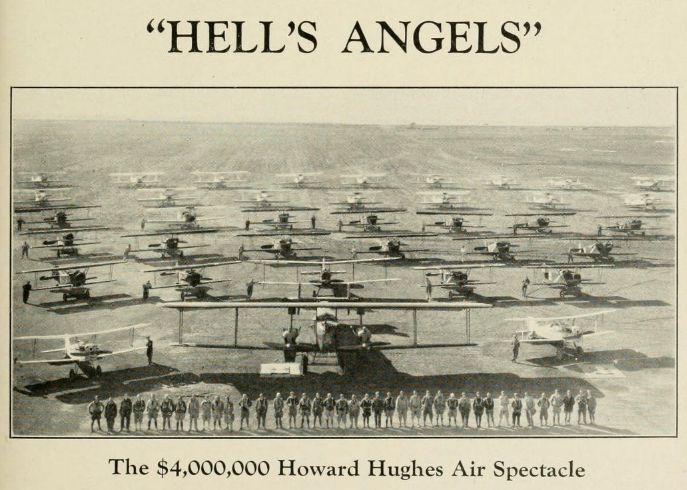
Howard Hughes was promoting Hell's Angels.


Hitchcock's biographical entry has his year of birth wrong. It should be 1899.


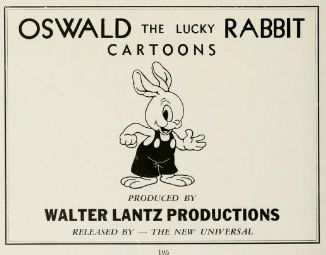


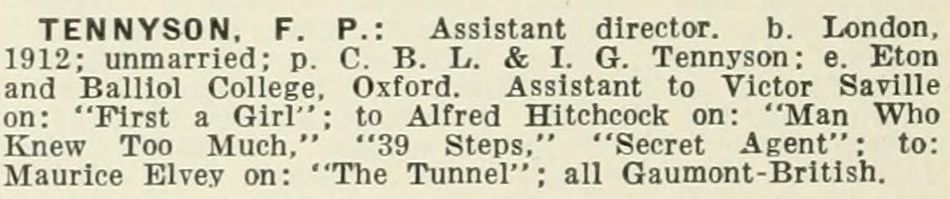

A list og Gaumont-British releases includes The Woman Alone and "Alfred Hitchcock Production (Untitled)." The latter could have been The Girl Was Young/Young and Innocent or The Lady Vanishes. King Solomon's Mines with Paul Robeson and Dr Syn with George Arliss are the only other ones I have heard of.


The Disney ad features the boss along with Mickey Mouse and Donald Duck.


An ad for Alliance Films mentions two directed by Graham Cutts, Aren't Men Beasts? and Radio Review of 1937.
Thank you to Ferdy on Films (http://www.ferdyonfilms.com/), The Self-Styled Siren (http://selfstyledsiren.blogspot.com/) and This Island Rod (http://thisislandrod.blogspot.com/) for organizing this blogathon. I'm having fun and learning.

Please consider donating to the National Film Preservation Foundation. For the Love of Film III is raising money to place The White Shadow, a 1923 Graham Cutts movie on which Alfred Hitchcock served as assistant director, on the internet for free viewing.
Thursday, April 12, 2012
The Great Locomotive Chase 150 - April 12, 2012

Conductor William Fuller, not about to stand for the theft of his train, pursued it on foot with a group of men. When they found a handcar, they used that. Eventually, they encountered an elderly switching locomotive, the Yonah, which they rode until they found a more modern locomotive, the Texas. Using these different modes, the pursuers kept enough pressure on the raiders that were not able to inflict much damage, and were not able to take on more wood for fuel.
About 20 miles from Chattanooga, with the General out of fuel, the raiders left their train and scattered. All were captured and tried as spies. Eight men, including Anderson, were hanged. Several received the Congressional Medal of Honor.
Both the General and the Texas still exist. The General is preserved in Kennesaw, Georgia and the Texas in Atlanta.
The story became the basis of two movies, one by Buster Keaton and one by Walt Disney. I like Keaton's movie better.
Thursday, February 3, 2011
Gung Hay Fat Choy #4 -- February 3, 2011
 Happy Lunar New Year. This is the year of the rabbit.
The image is from Walt Disney's 1927 Oswald the Lucky Rabbit cartoon "Trolley Troubles." Oswald's appearance changed over the years. Disney lost control of the character the next year and didn't get him back until 2006. This cartoon, the first Oswald to be released, includes some wonderful Ub Iwerks travelling shots from the point of view of the trolley as it barrels along the tracks.
Sunday, July 22, 2007
Book: Walt Disney/The Triumph of the American Imagination - July 22, 2007

I just finished reading Neal Gabler's Walt Disney/The Triumph of the American Imagination. This book takes the view that Walt Disney's work, from the animated cartoons through Disneyland, to Epcot, all stemmed from a desire to create a controlled and ordered world through his imagination.
Gabler talks about Disney's early life, and explores some of the embellishments that Walt added over the years. Gabler gives a good account of Walt's entry into animation and the ways in which Disney changed animation from a haphazard business to an art. More than other biographers, Gabler then examines the way in which Walt became disillusioned with animation after the strike and the war.
I enjoyed the way Gabler talked about Walt's obsession with his garden railroad, and then with Disneyland. I did notice a factual error about the source of the first two Disneyland locomotives, but that was the only error I could detect in the whole book.
Gabler addresses the issue of Disney's alleged anti-Semetism and refutes it. Disney associated with anti-Semites, but was not one himself.
The book is worth reading.
Subscribe to:
Posts (Atom)